Lead NDT is a Full-service inspection company that specializes in Non-destructive testing of oil and gas equipment with API-certified inspectors and the ability to perform inspections utilizing Magnetic Particle (MT), Liquid Penetrant (PT), Ultrasonics (UT), and Electromagnetic Induction (EMI).
Lead Non-Destructive Testing and pipe services can provide the following certified services:

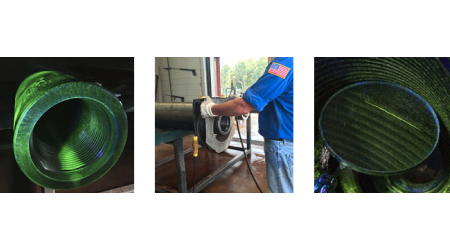
Magnetic particle testing is utilized to inspect ferromagnetic materials (those that can be magnetized) for defects located at or near the surface.
This technique is highly effective in detecting cracks, stress fractures, and other surface flaws. Lead NDT commonly utilizes mag particle testing for the inspection of handling tools such as slips, elevators, bales, etc.
Main Advantages:

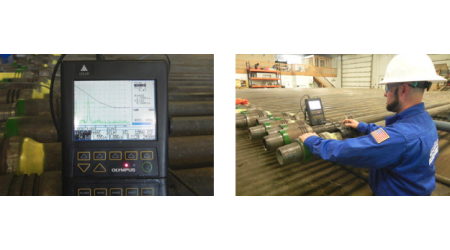
Ultrasonic testing is utilized to detect surface and subsurface defects in a wide range of materials including metals, plastics, and wood.
Ultrasonic inspection may also be utilized to measure the thickness of materials and to characterize the properties of various materials. This form of testing is an electronic process based on sound velocity and attenuation measurements. Lead NDT commonly uses ultrasonic testing on welds, SEA, and various raw materials. In addition, we utilize the latest in ultrasonic technology to ensure accurate results and dependability.
Main Advantages:

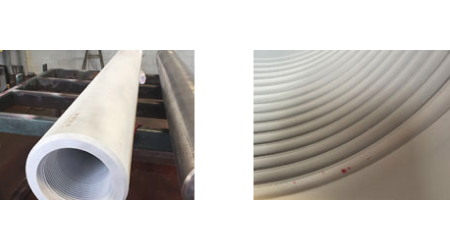
Liquid penetrant testing is utilized to locate cracks, porosity, and other defects that break the surface of a material and have enough volume to trap and hold the penetrant material.
This type of inspection can be utilized to inspect large areas very efficiently – and will work on most nonporous materials.
Main Advantages:

Visual inspection or visual testing (VT) is always performed as the first step in any NDT inspection – unless the specimen is in a location or position that cannot be viewed.
Visual testing requires direct line-of-sight contact with the portion of the specimen to be inspected.
Adequate illumination of the test specimen is also required – as well as a thorough understanding of the nature and origin of potential defects within the test object. The technician must also have detailed knowledge of the specifications controlling the inspection process to properly perform visual testing.

Electromagnetic inspection (also known as electromagnetic induction) has been proven to be the most efficient and effective method for detecting defects that can shorten the life of drill pipe.
EMI is capable of detecting a much wider range of defects than other testing methods – including fatigue cracks, corrosion, pits, cuts, washouts, and more. This advanced technology utilizes a portable device that can be used on-site and automatically scans the entire length of the pipe for defects.
By investing in an inspection and maintenance program that utilizes EMI, you can avoid failure of your drill string – which can result in costly downtime or even the loss of an entire well.
Main Advantages: