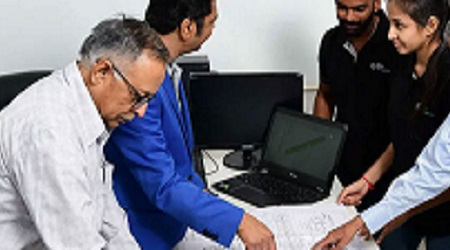
TCR Advanced Engineering is a service partner of TCR Engineering Services, a very reputed company established way back in 1973 by the great visionary late Sh. V. K. Bafna. TCR Advanced Engineering provides technical services in the area corrosion and metallurgy to the industries not only at Vadodara, a hub for chemical and petrochemical & fertilizer industries but also organizations world around. Company has a set-up comprising full-fledged advanced metallography and material characterization facilities at Vadodara, Gujarat.
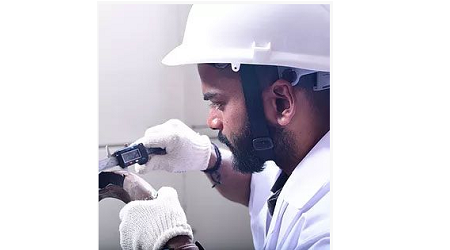
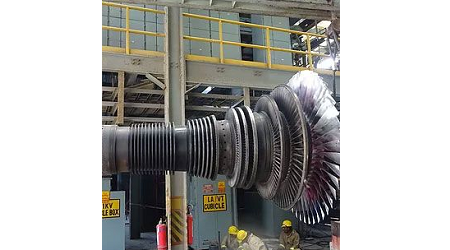
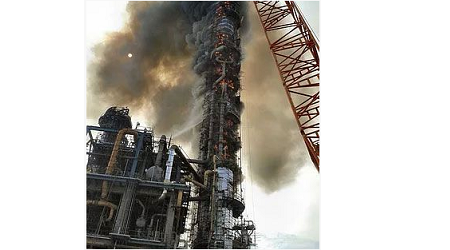
TCR Advanced through its team of experts offers specialized services in the field of metallography and failure Investigation. The company provides asset integrity management, failure investigation of industrial plants and equipment, In-situ metallography, assessment of in-service degradation, components / parts indigenization, selection of materials, remaining life assessment (RLA) and fitness for service (FFS). TCR Advanced Engineering has a competent team of metallurgical and mechanical engineers, technicians and field staff working for in-house as well as on-site testing and investigation.
Mr. Paresh U. Haribhakti (Managing Director) who is a Metallurgical Engineer and holds Master degree in Material Technology heads the company. He is having vast experience of more than a two decades in the field of R & D activities, failure investigation, damage assessments and RLA studies at global level. TCR Advanced has set up a full-fledged advanced testing division at Vadodara to meet with the industries requirements for testing and material characterization such as raw material testing, material identification, microstructure examination for evaluation of material processing, chemical properties & physical properties of metallic materials. The testing division of TCR Advanced is NABL accredited as per international standard ISO/IEC-17025.

Failure Analysis Objectives
The first step in managing the actual failure analysis effort is to determine what you expect from the final outcome. During TCR's initial meetings with the client we develop a charter that clearly delineates the terminal objective of the analysis. This is further enhanced through the development of critical success factors that outlines whether the terminal objectives have been obtained. At TCR Advanced, we adopt a disciplined vertical problem solving methodology used to determine levels of root causes of specific failure events.
Failure Analysis Procedure
Cause of failure is determined using state-of-art analytical and mechanical testing procedures and often includes testing under simulated service conditions. A combination of analysis and physical testing defines the problem and helps in providing recommendations for the solution.
Cause of failure is determined using state-of-art analytical and mechanical testing procedures and often includes testing under simulated service conditions. A combination of analysis and physical testing defines the problem and helps in providing recommendations for the solution.In the course of the various steps listed below preliminary conclusions are often formulated. If the probable fundamental cause of the metallurgical failure becomes evident early in the examination, the rest of the investigation focuses on confirming the probable cause and eliminating other possibilities. The metallurgical failure analyst compiles the results of preliminary conclusions carefully considering all aspects of the failure including visual examination of a fracture surface, the inspection of a metallographic specimen, and the history of similar failures. The complete evaluation sequence is summarized as under:
If necessary tests may also include Weld Examination, Case Depth, Decarburization Measurement, Coating/Plating Evaluation, Surface Evaluation and/or Grain Size Determination
Chemical analysis (bulk, local, surface corrosion products, deposits or coating and microprobe analysis)
Tests to simulate environmental and physical stress that may have played a role in the failure analysis of fracture mechanics.
Selection and testing of alternative products and/or procedures that will significantly improve performance On-site evaluation and consulting services and Formulation of conclusions and writing the report

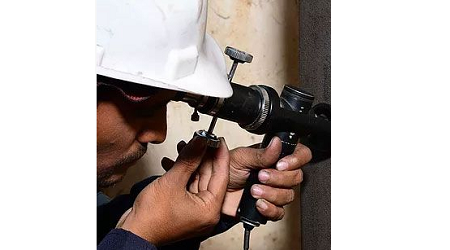
In-situ metallography is performed for following areas :

The Salient Features Involved are:
UNDERSTANDING THE ACTUAL DEGRADATION MECHANISM
VISUAL EXAMINATION
STRESS ANALYSIS
NON DESTRUCTIVE TESTING :
Often the physical properties are verified and tests like stress-rupture, that are not so common are conducted. Having ascertained the extent of degradation, judgment on the remaining life is made. In addition to this, periodic inspection procedures are formulated and followed to monitor the health of the equipment during the course of operation. RLA is done based on life limiting factors like corrosion, creep and microstructure degradation with respect to time. There are different approaches available to assess the remaining life based on thermal cycles, creep calculation and fatigues cycles. Based on these aspects, the remaining life is ascertained with integration of rate of degradation v/s available material properties.

FFS stands for Fitness for Service, assignments in India and abroad for chemical, petrochemical, fertilizer, power plants and their components is dealed by TCR Advanced. TCR's FFS methodology is primarily based on API 579, BS 7910 and is governed by the fundamental engineering concepts & calculations, actual characterization of flaw / degradation, along with fracture mechanics approach. It is a practical tool that assists the management to select the alternative action i.e. whether to run, repair or replace the equipment. The heuristic aspect of useful remaining life of the equipment at the time of inspection is also part of FFS study.
ASME, API, BS 5500 & other recognized design codes provide rules / guidelines for design and fabrication of new items of plant e.g. pressure vessels, piping & storage tanks. These codes do not address the fact that many of these items deteriorate during operation & that defects developed due to deterioration or from original fabrication, which are larger than allowed by the quality control levels found during in-service inspections.
The need for FFS arises when equipment undergoes some serious deviation in operating conditions exposing it to severe service conditions other than for which the equipment was originally designed. FFS assessment is a multi-disciplinary approach. The component under screening may contain flaws or other damages, or it might have been subjected to non-anticipated operating conditions.
The purpose of FFS assessment is not simply to continue the component in its service beyond its intended serviceable life, but to ensure utilization of full potential concerning considering its present status.
The typical outcome of a Fitness for Service approach provides a go / no-go decision. This provides a rational make-shift arrangement to continue the production. Additionally, the fitness for service assessment of components can help setting up proper inspection schedules, modified maintenance procedures and more of on-line monitoring systems

TCR Engineering Services has partnership with PP SIMTECH (UK), to provide comprehensive Risk Based Inspection (RBI) as well as Fitness for Service (FFS) assessments.
The reliable and proven Risk based Inspection (RBI) technology process developed by PP SIMTECH (UK), with key guidance from API 580/581 and UK HSE, has been accepted globally as good engineering practice by leading international companies. PP SIMTECH has successfully implemented RBI and FFS at global majors including BP, Dow Chemicals, GPIC, ADNOC-Fertil, Norsk Hydro, BASF, INEOS.
Risk-based approach to inspection provides immense benefits which includes an increase in plant availability, cost saving, minimum shutdown durations, change in inspection strategies and intervals and improved safety compliance. The RBI team study also improves the team working and communication between all the departments of the plant.
PP SIMTECH uses rbiAsyst™, a fully auditable & transparent software system to facilitate the RBI team study and successful implementation of RBI technology process at a plant site.
The RBI team study facilitated by TCR PP SIMTECH and rbiAsyst™ software provides plant management and operations team a reliable method to identify and resolve complex technical issues associated with static equipment such as reactors, furnaces, strippers, distillation columns, heat exchangers, pressure vessels, reformers, boilers, fired heaters along with its associated items such as interconnected piping and storage tanks.
Reliable assessment and calculation of risk profile of an item, based on its "active" and "potential" Damage Mechanism ensures that the resulting inspection interval for the item is reliably optimized in a safe and cost-effective manner.
The TCR PP SIMTECH team includes Mechanical Engineers, Metallurgists, Corrosion Engineers, NDT Experts, RBI Experts and Project Managers and provides services in areas like RBI (API 580/581), Fitness-For-Service (API 579), Material Damage Mechanisms Assessment, Metallurgical Investigation & Failure Analysis and In-service Inspection.
Our approach to risk-based inspection is based on a strong co-operation between the plant personnel and TCR PP SIMTECH experts.